IMM written exam doesn’t require studying everything—it requires studying smart. With a clear understanding of the paper structure, focused theory resources, strong cardiology preparation, and repeated MCQ practice, you can pass confidently even with a busy clinical routine. This guide simplifies your approach so you can maximize output with minimal but high-yield effort.
The IMM written exam is challenging—not just because of its depth, but because you’re preparing alongside a busy clinical routine. The key to success is not studying everything, but studying smart, staying consistent, and revising repeatedly.
This guide combines the exam structure + best resources + practical strategy to help you pass confidently.
🧾 IMM Written Exam Structure (Must Know)
The exam consists of 2 papers, each with 100 MCQs and 2 hours duration.
📄 Paper 1: General Medicine
100 MCQs
Covers core general medicine
Concept-based and high-yield
👉 This paper builds your foundation—strong basics are essential.
❤️ Paper 2: Mixed + Choice-Based Paper
🔹 First 40 MCQs (Compulsory)
General Medicine + Cardiology
Must be attempted by everyone
Cardiology is heavily tested
🔹 Remaining 60 MCQs (Choice Section)
You must choose ANY 3 specialties (20 MCQs each):
Pulmonology
Nephrology
Neurology
Hematology & Oncology
Gastroenterology
Dermatology
👉 Total = 60 MCQs (3 subjects × 20 each)
🎯 Smart Strategy Based on Exam Pattern
✅ 1. Be Selective (Don’t Study Everything)
Choose 3 specialties early
Focus only on those
Revise them multiple times
👉 Smart candidates don’t cover everything—they master selected areas
❤️ 2. Don’t Ignore Cardiology
Part of compulsory section
Concept-heavy and frequently tested
👉 Strong cardiology = easy marks
👉 Weak cardiology = major loss
📚 Recommended Resources (Keep It Limited)
Using too many books is the biggest mistake. Stick to focused, high-yield sources:
📖 Theory
Davidson's Principles and Practice of Medicine (or)
Kumar and Clark's Clinical Medicine
Oxford Handbook of Clinical Medicine
Passmedicine
👉 Strategy:
Choose one main textbook (Davidson or Kumar & Clark)
Use Oxford for quick revision
Use Passmedicine for concept testing
🧠 MCQs Practice (Most Important)
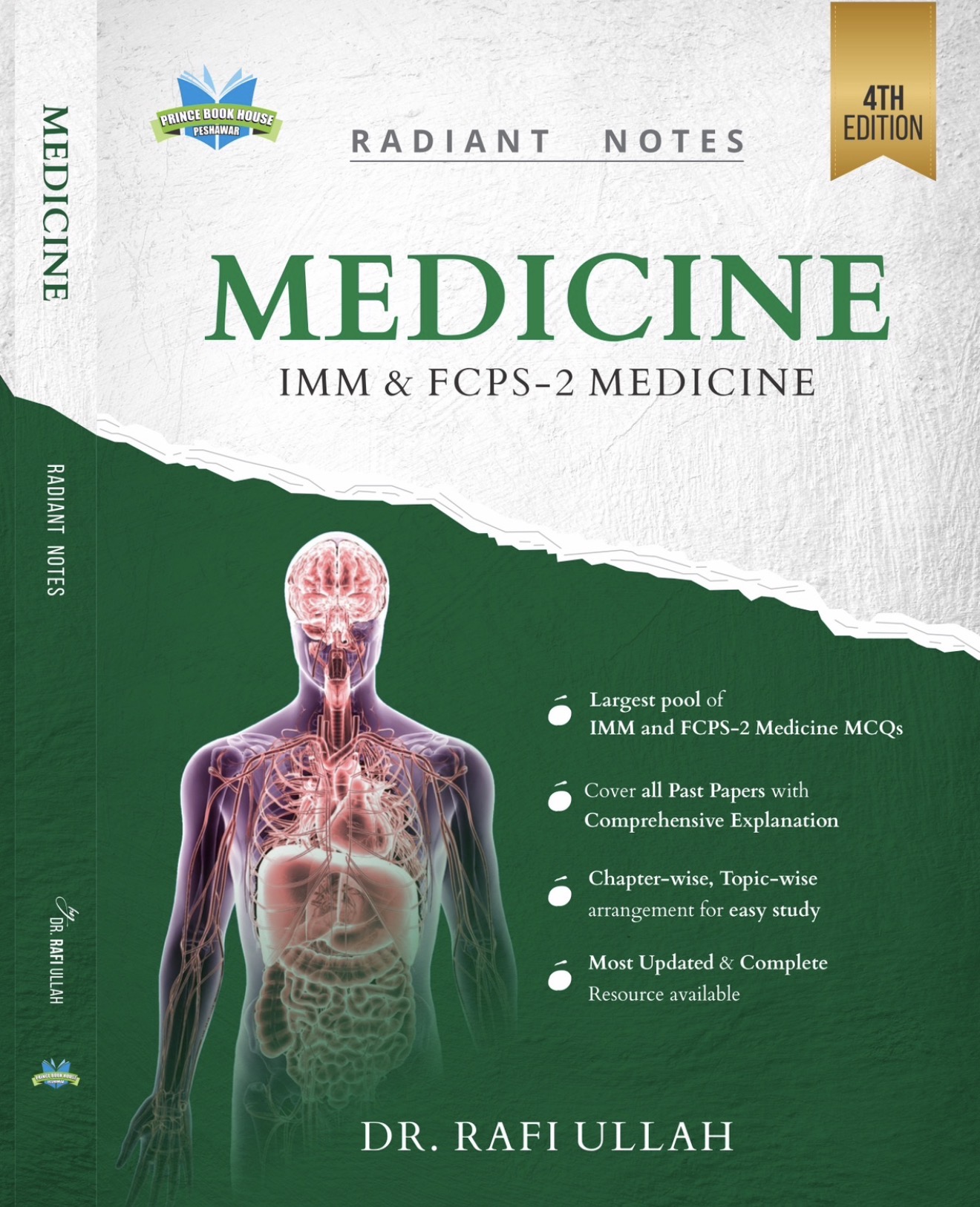
Rafiullah MCQs Book
Why this works:
Large and exam-focused MCQ pool
Chapter-wise and topic-wise organization
Covers repeat and high-yield questions
👉 One book is more than enough—if revised properly.
🔁 Revision Strategy (Your Real Weapon)
With a busy schedule, revision is everything:
⏱️ How to Study with a Busy Routine
1–2 focused hours daily
MCQs during breaks
Weekly revision day
👉 Consistency beats long study hours.
🚫 Common Mistakes to Avoid
Using too many resources
Trying to cover all specialties
Ignoring cardiology
Reading without MCQs
Not revising